> For the complete documentation index, see [llms.txt](https://docs.secoda.co/llms.txt). Markdown versions of documentation pages are available by appending `.md` to page URLs; this page is available as [Markdown](https://docs.secoda.co/features/ask-questions-in-secoda.md).
# Questions
Learn about our Questions feature here
## **Introduction**
Discover how our Questions feature enhances data discoverability beyond traditional metadata or metrics. This tool is designed to handle complex, nuanced questions that require personalized responses from your data team.
## **Efficient Question Management**
Traditionally, questions to the data team are managed ad hoc via platforms like Slack and Jira. With our integrations, you can streamline this process:
* **Slack Workflow**: Integrate directly with Slack to manage questions within your usual communication channels. Learn more about the Slack integration [Slack <> Questions workflow](/best-practices/slack-less-than-greater-than-questions-workflow.md).
* **Jira Integration**: Seamlessly connect with Jira to handle data-related queries through your existing project management tools. Integrate with [Jira](/extensions/jira.md).
## **Using Questions in Secoda**
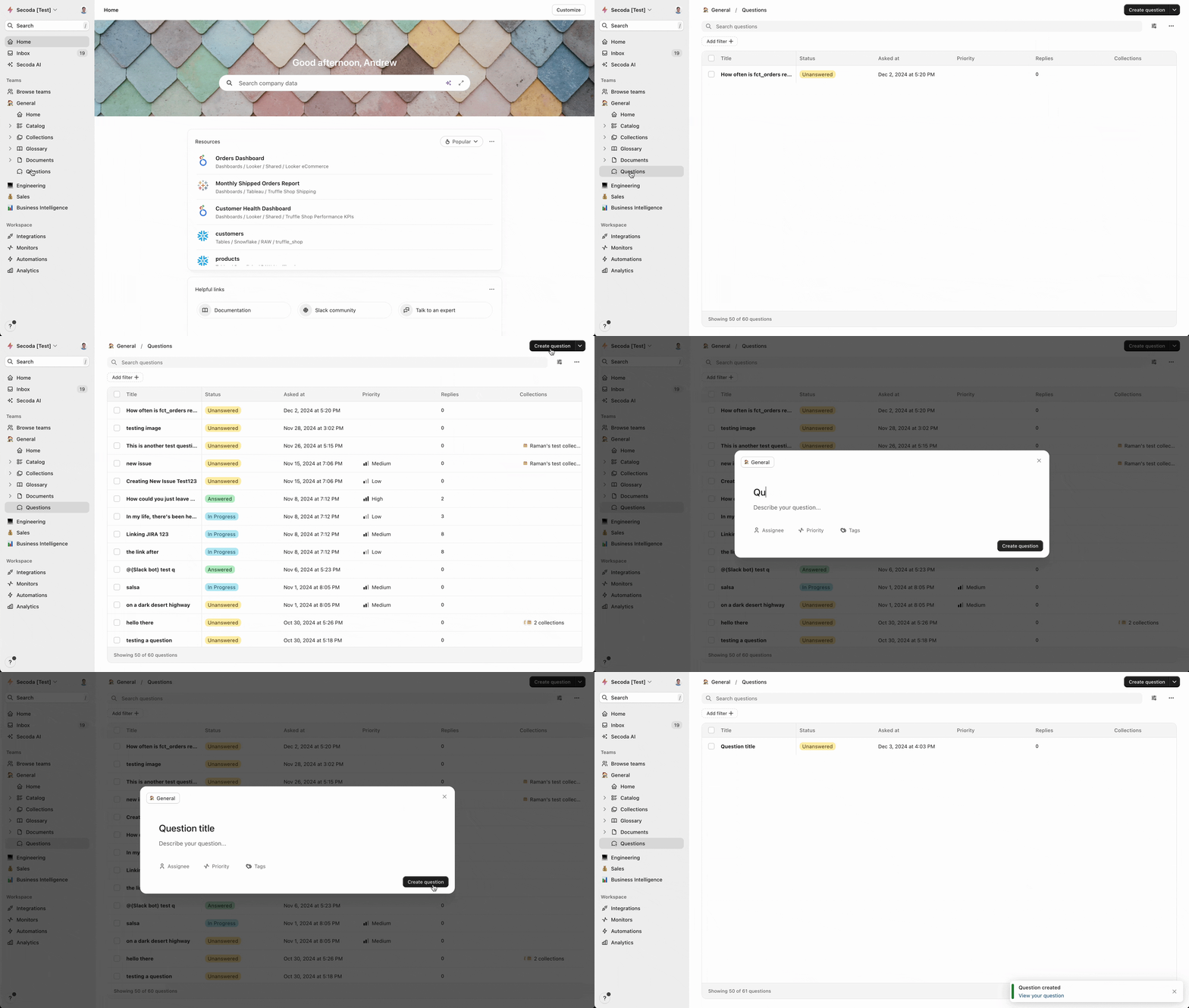
* **Browsing Previous Questions**: Within Secoda, users can browse previously asked questions by going to the Questions homepage.
* **Asking New Questions**: Any user can pose new questions from the Questions homepage, or by navigating to a resource and asking it from there.
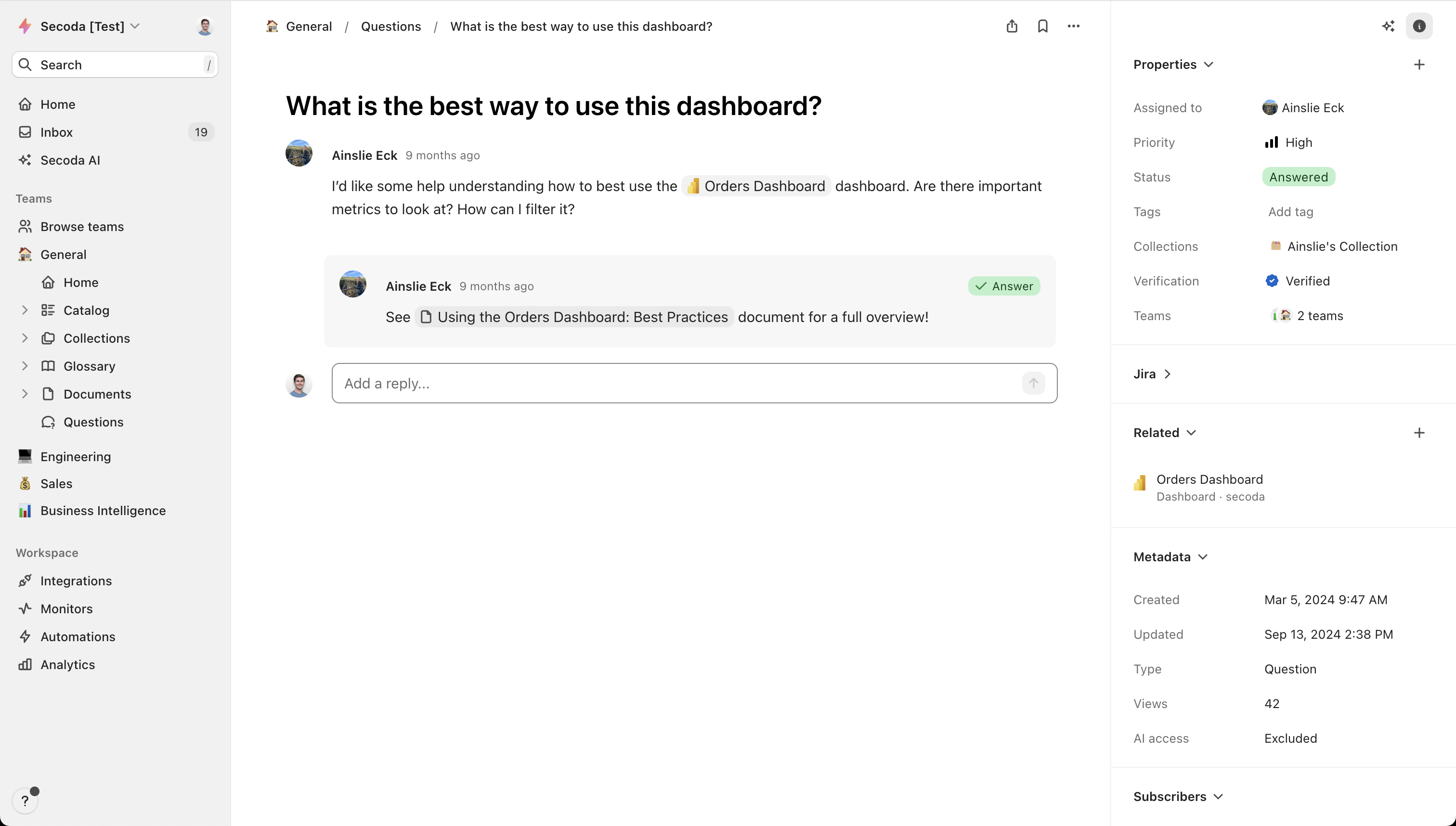
* **Assigning Owners:** Assign an Owner or Group to a question if you know who can answer; if unsure, leave that blank. Admins can automate owner assignments based on the question type. See this example for guidance [Rule-based automations](/features/automations/automations-use-cases.md#assign-owners-to-questions).
* **Answering Questions**: Once a question is posted, teammates can comment, and editors have the ability to verify or provide different answers.
* **Finalizing Answers**: Admins or Editors select the best answer, which is then marked with a green checkmark and indexed in Secoda’s central search, making it easily accessible for anyone who might have similar queries in the future.
## About Questions
* **Rich Context**: Since Secoda integrates with your organization's data systems, responses can include links to relevant tables, queries, or related questions, enriching the context and utility of each answer.
* **Metadata Management**: Each question features a sidebar where users can set priorities, add the question to collections or teams, and more. Admins and editors can also delete incorrect or outdated responses.
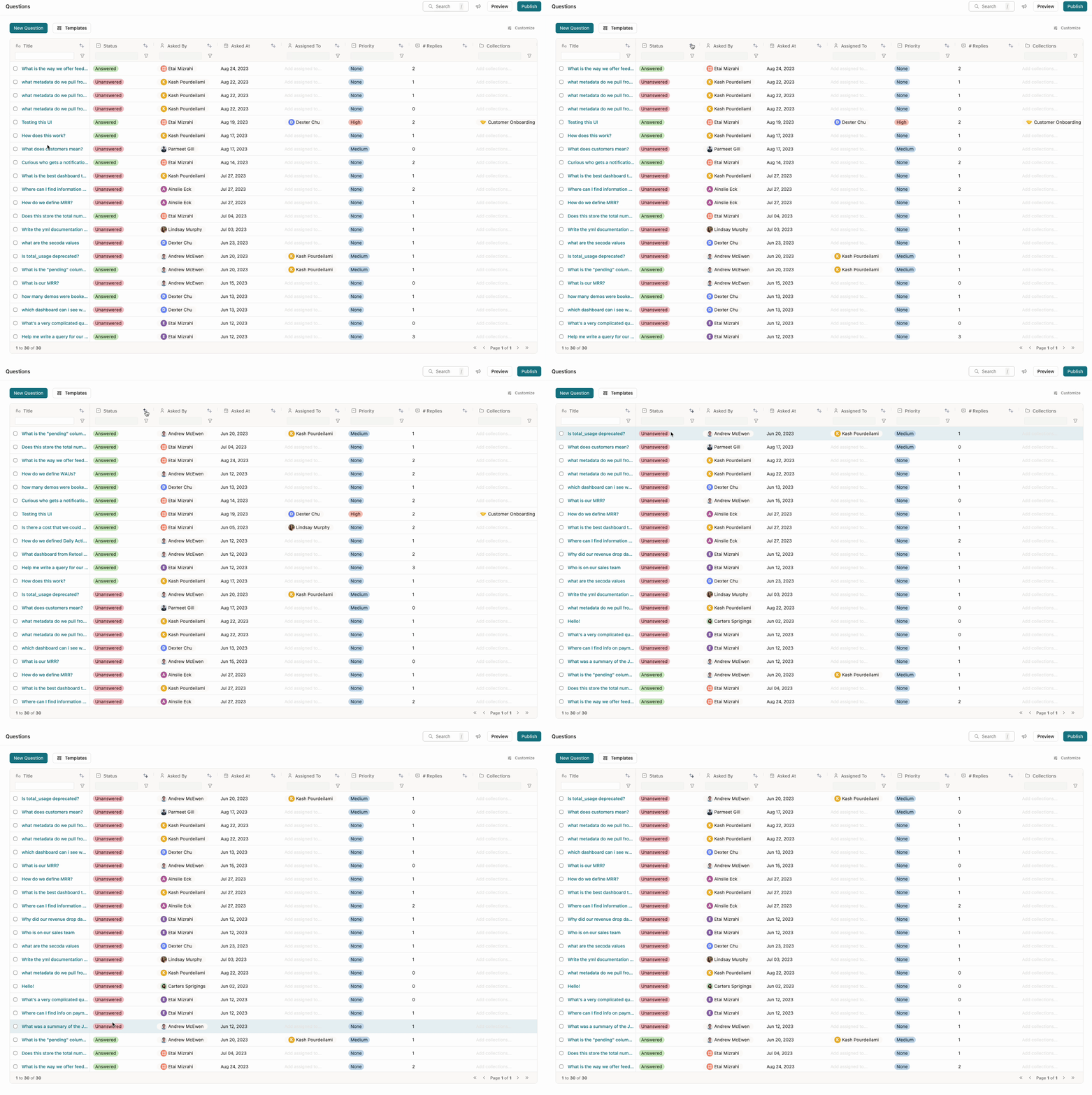
* **Unanswered Questions**: Easily filter and view unanswered questions by sorting by status, ensuring no query goes unresolved.
## Additional resources
Learn more about our Questions feature by exploring the pages below!
[Slack <> Questions workflow](/best-practices/slack-less-than-greater-than-questions-workflow.md)
[Populate Questions with FAQs](/readme/secoda-as-an-admin/populate-questions-with-faqs.md)
[Jira](/extensions/jira.md#push-to-jira)
---
# Agent Instructions
This documentation is published with GitBook. GitBook is the documentation platform designed so that both humans and AI agents can read, navigate, and reason over technical content effectively. Learn more at gitbook.com.
## Querying This Documentation
If you need additional information that is not directly available in this page, you can query the documentation by asking a question.
Perform an HTTP GET request on the following URL with the `ask` and `goal` query parameters:
```
GET https://docs.secoda.co/features/ask-questions-in-secoda.md?ask=&goal=
```
`ask` is the immediate question: it should be specific, self-contained, and written in natural language.
`goal` is what the user is ultimately trying to achieve, the reason they need the answer. Sharing it helps GitBook give you a better, more relevant answer. A goal is most helpful when it describes the outcome the user wants rather than restating the question. For example, with `ask=how do I create an API token`, a goal like `automate deployments from our CI pipeline` lets GitBook tailor the answer to that use case.
The response will contain a direct answer to the question and relevant excerpts and sources from the documentation.
Use this mechanism when the answer is not explicitly present in the current page, you need clarification or additional context, or you want to retrieve related documentation sections.