> For the complete documentation index, see [llms.txt](https://docs.secoda.co/llms.txt). Markdown versions of documentation pages are available by appending `.md` to page URLs; this page is available as [Markdown](https://docs.secoda.co/readme/secoda-as-an-admin/settings.md).
# Settings
Learn how to access and edit Account and Workspace settings.
The Settings page in Secoda allows Admins to configure Account and Workspace-level settings. Editors and Viewers can manage their Profile and Notification settings here, but they won't have access to most Workspace settings.
## Accessing Settings
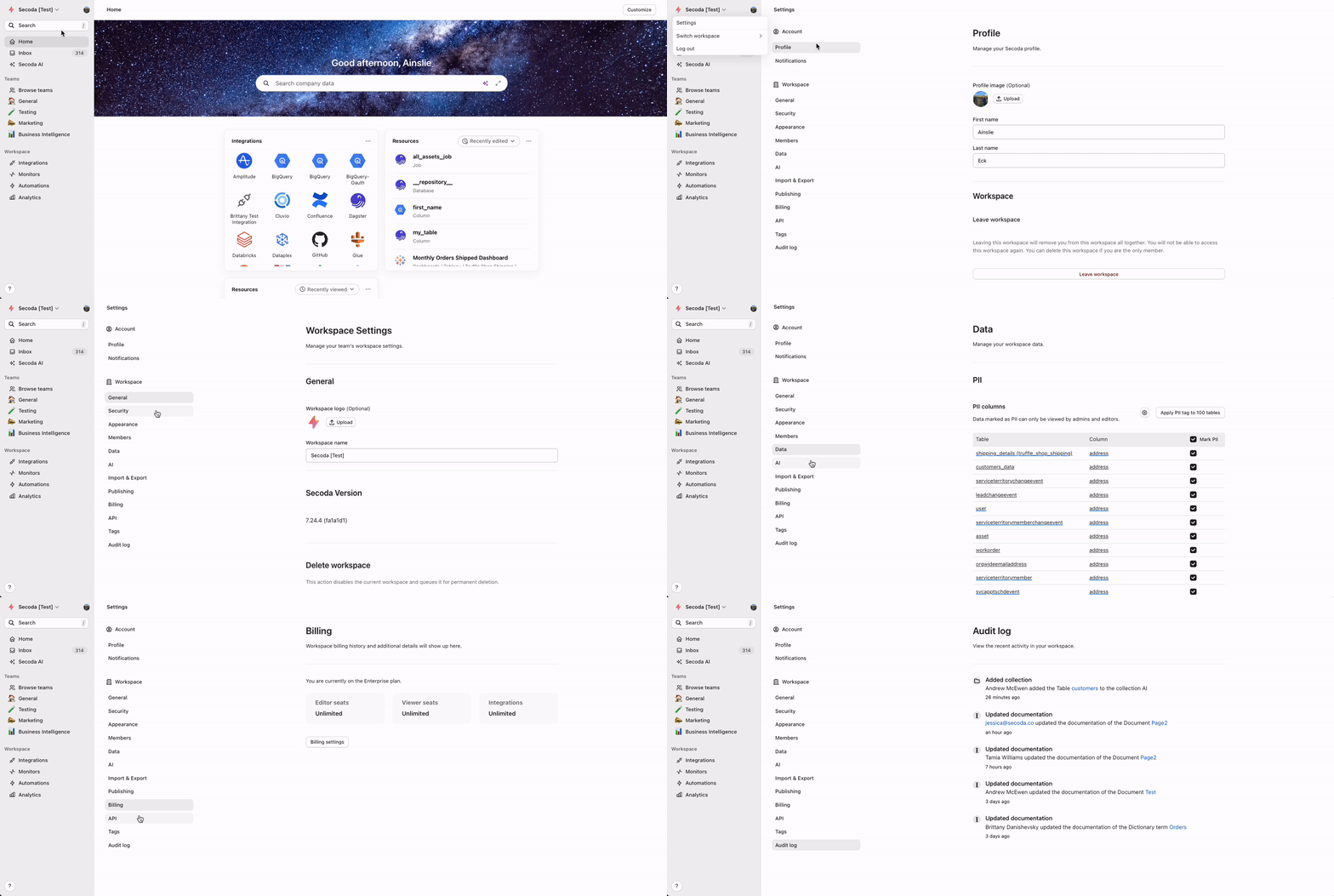
To access Settings, click on the workspace name in the top left of the UI, and select "Settings."
Secoda Settings
## Account Settings
* **Profile**: Users can update their profile photo and name. They also have the option to leave the workspace if necessary.
* **Notifications**: Choose which notifications to receive and where to receive them. Read more: [Notifications](/features/notifications.md).
## Workspace Settings
The following settings are configurable only by Admins:
* **General**: Add a workspace logo, edit the workspace name, view the current version of your workspace, and delete the workspace if needed.
* **Catalog:** Set a default view for the catalogs across your workspace. Choose which properties to show, and in what order.
* **Security**: Add additional email domains allowed to sign up for the workspace and set up SSO. Read more: [Sign in options](/readme/secoda-as-an-admin/sign-in-options.md).
* **Appearance**: Configure resource pages to be full-width and hide the '?' help and feedback button from viewers and guests.
* **Members**: Manage workspace members and groups. Read more: [Invite your teammates](/readme/secoda-as-an-admin/invite-teammates.md).
* **Data**: View potential PII data identified by Secoda and apply the PII tag in bulk. Manage the criteria for PII identification. Read more: [PII identifier](/resource-and-metadata-management/tags/auto-pii-tagging.md).
* **AI**: Manage Secoda AI preferences, including AI governance, tools, and custom instructions. Read more: [Secoda AI](/features/ai-assistant.md).
* **Import & Export**: Bulk import and export metadata. Read more: [Import and export resources](/resource-and-metadata-management/import-and-export-data.md).
* **Publishing**: Configure your publishing settings. Read more [Publishing](/features/publishing.md).
* **Billing**: View billing settings and plan details.
* **API**: Access API documentation and view the history of API keys used. Read more: [https://github.com/secoda/gitbook/blob/master/readme/secoda-as-an-admin/broken-reference/README.md](https://github.com/secoda/gitbook/blob/master/readme/secoda-as-an-admin/broken-reference/README.md "mention").
* **Tags**: Create and manage tags to categorize your data resources. Read more: [Tags](/resource-and-metadata-management/tags.md).
* **Audit Log**: View all historical activity in the workspace. Read more: [Publishing](/features/publishing.md#audit-log).
---
# Agent Instructions
This documentation is published with GitBook. GitBook is the documentation platform designed so that both humans and AI agents can read, navigate, and reason over technical content effectively. Learn more at gitbook.com.
## Querying This Documentation
If you need additional information that is not directly available in this page, you can query the documentation by asking a question.
Perform an HTTP GET request on the following URL with the `ask` and `goal` query parameters:
```
GET https://docs.secoda.co/readme/secoda-as-an-admin/settings.md?ask=&goal=
```
`ask` is the immediate question: it should be specific, self-contained, and written in natural language.
`goal` is what the user is ultimately trying to achieve, the reason they need the answer. Sharing it helps GitBook give you a better, more relevant answer. A goal is most helpful when it describes the outcome the user wants rather than restating the question. For example, with `ask=how do I create an API token`, a goal like `automate deployments from our CI pipeline` lets GitBook tailor the answer to that use case.
The response will contain a direct answer to the question and relevant excerpts and sources from the documentation.
Use this mechanism when the answer is not explicitly present in the current page, you need clarification or additional context, or you want to retrieve related documentation sections.