> For the complete documentation index, see [llms.txt](https://docs.secoda.co/llms.txt). Markdown versions of documentation pages are available by appending `.md` to page URLs; this page is available as [Markdown](https://docs.secoda.co/features/documents/comments.md).
# Comments
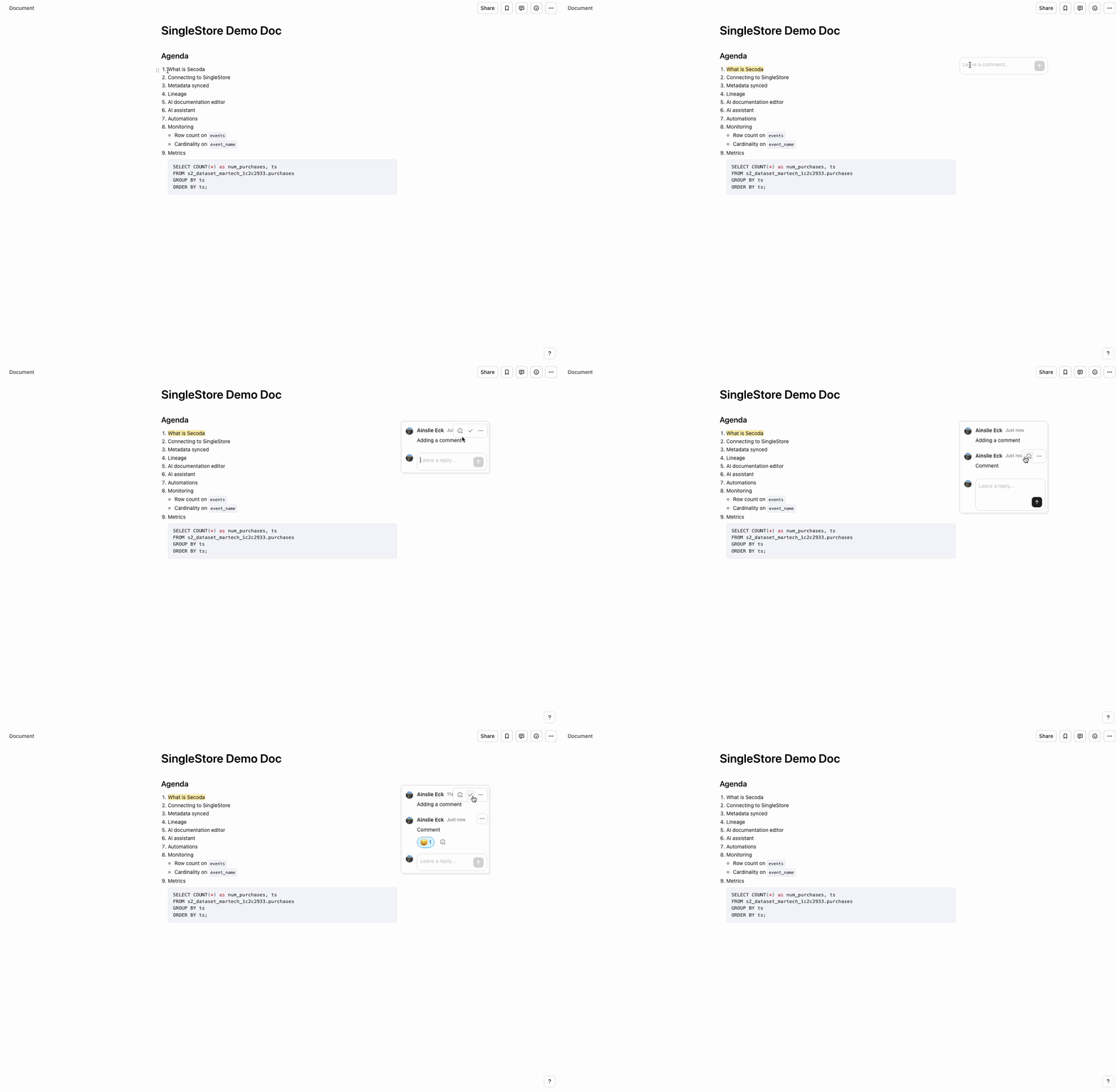
Comments in Secoda encourage collaboration between teams both in and outside of the Data team. Users can highlight text to add comments on a Document, as well as reply to and share emoji reactions to those comments. Once the thread is resolved, users can resolve the comments to hide them from the Document.
Comments will allow users to align on definitions, internal projects, task management, and much more.
### How to use Secoda Comments
1. Navigate to a Document that you'd like to collaborate on
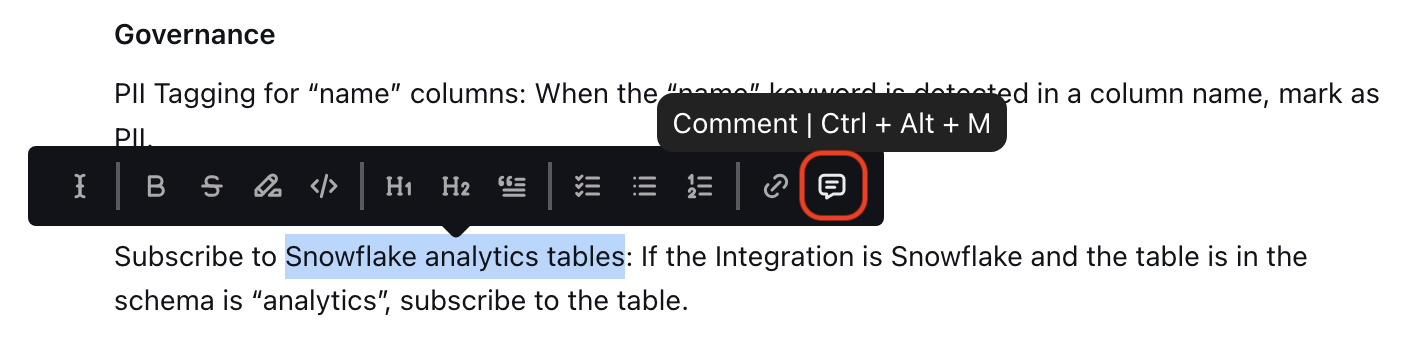
2. Highlight text that you'd like to add a comment to by clicking and dragging over the text
3. Click the comment icon, type your comment and click the arrow to share
### Other Comments capabilities
* Click the three dots on your comment to delete or edit it
* React to comments using the emoji icon
* Reference a specific resource in your comment by using the @ symbol and typing the resource name
* Reply to comments in the thread
* Resolve comments by clicking the check mark :heavy\_check\_mark: on the comment
Comments Video Resource
{% hint style="info" %}
Comments are only available on Documents and Glossary Terms. Comments are not currently available on table, dashboard, and other resource's documentation.
{% endhint %}
---
# Agent Instructions
This documentation is published with GitBook. GitBook is the documentation platform designed so that both humans and AI agents can read, navigate, and reason over technical content effectively. Learn more at gitbook.com.
## Querying This Documentation
If you need additional information that is not directly available in this page, you can query the documentation dynamically by asking a question.
Perform an HTTP GET request on the current page URL with the `ask` query parameter, and the optional `goal` query parameter:
```
GET https://docs.secoda.co/features/documents/comments.md?ask=&goal=
```
`ask` is the immediate question: it should be specific, self-contained, and written in natural language.
`goal` is optional and describes the broader end goal you are ultimately trying to accomplish on behalf of the user. GitBook uses it to tailor the answer towards what is most useful for that goal.
The response will contain a direct answer to the question and relevant excerpts and sources from the documentation.
Use this mechanism when the answer is not explicitly present in the current page, you need clarification or additional context, or you want to retrieve related documentation sections.